Showing posts with label China. Show all posts

Wednesday, May 9, 2012

China Uses Yuan, Gold To Pay For Some Iran Crude

"“China is using its currency, the yuan, and gold to pay for some of its imports of Iranian crude oil, according to Iran trade professionals.
The news underscores how the Islamic Republic is able to alleviate the effect of mounting sanctions, which in turn could ease global oil supply concerns and push oil prices further down.
One Iran trade professional said last week that Chinese oil companies have for many months been using the yuan to pay for some Iranian oil, after many banks refused to handle payments in dollars.
"In return, Iran is using the currency to pay for infrastructure such as roads," the person told Dow Jones Newswires.
According to a person in the shipping industry, China now represents one-third of Iran's oil sales.
European refiners have cut purchases of the Islamic Republic's crude ahead of a planned embargo coming into force this summer; Asian buyers have also reduced imports to avoid being banned from the U.S. financial system.
Iran is also using a local currency, the rupee, to sell some of its crude to India. However, such a payment mechanism tends to be unfavorable for Iran, locking Tehran into captive trade relations with its oil buyers. In addition, there is only so much the Islamic Republic can buy in goods from China and India.
So in addition to the yuan, Iran has also agreed to be paid in gold for some of its oil, the trade professionals say. In one recent case, two Iranian oil tankers heading for China were bartered at sea with their equivalent in the precious metal, one Iran trade professional said…”

Leeb - We Will Now See a Gold Standard Imposed in Europe

"With stocks trading lower, along with gold and silver, today King World News interviewed acclaimed money manager Stephen Leeb, Chairman & Chief Investment Officer of Leeb Capital Management.  Leeb told KWN we will see a gold standard imposed on Europe.  Leeb also said the Chinese will move to back the yuan with gold.  Here is what Leeb had to say about the situation:  “Gold is reacting to what’s going on in Europe.  It’s the last resort of liquidity for a lot of people.  It’s been the best performing major asset over the last 12 years.  You have a lot of chaos in Europe an no one knows what’s happening, so there has been a lot of reflex selling of gold.”


Stephen Leeb continues:

“Gold has been a bit stronger than I thought it would be considering the danger of a euro breakup is accelerating.  I don’t think there’s any chance the euro holds together under its current form.  Unemployment among the young in Greece is about 50%.  That can’t stand, it just can’t.

These politicians can’t do this forever.  People are not going to tolerate starvation.  Sooner or later the politicians are going to have to respond.  This means less austerity and more growth, and the end of German hegemony in Europe.

This looks similar to the end of World War I.  Once the euro goes, it will be very much like the end of the war.... 

“You are going to have a lot of currency devaluation.  You are also going to see massive inflation.  Everybody knows what that means for gold.

So you are in the last hours of turbulence for the gold market (to the downside).  Once this correction ends, you are going to have a barnburner to the upside.  Gold will just vault.  I don’t think investors will even remember these frustrating days.  I had been warning we could see this drop in gold because of the problems in Europe, but investors should take advantage of it.

Look at what China is doing.  China is buying gold hand over fist right now.  They are going to move the yuan forward as the world’s reserve currency and it’s going to be partially backed by gold.  The world can also expect to see a gold standard imposed on Europe in the next 12 to 18 months..."


Tuesday, April 17, 2012

Embry - What’s Happening in China is Wildly Bullish for Gold

"The Chinese, over the weekend, stated their intention they wanted to make the yuan a much more internationally traded currency. Up to now it’s been so restricted that you couldn’t really deal in it. If this is their intent, and I believe it is, this is a huge step.
This is spectacularly bullish for gold because I think the Chinese will ultimately want to back their money with gold. The Chinese are huge players in the gold market. That’s their agenda, to be seen as a major play in the international currency market.
What the US dollar doesn’t need these days is serious competition in terms of being the reserve currency. If the US dollar starts to move off center stage as time goes on, this will be wildly bullish for gold. One of the things that would destabilize the whole financial system is if people figured out how vulnerable the US dollar is.”

Tuesday, April 10, 2012

Von Greyerz - Chinese Imports of Gold are Massive Right Now

"Today Egon von Greyerz told King World News that although Italian banks are currently under attack, pressure will make its way into Portugal and eventually the UK as well. Egon von Greyerz is founder and managing partner at Matterhorn Asset Management out of Switzerland. Von Greyerz also said he is seeing large money flows into gold, and over in Asia, Chinese imports of gold are “massive.” But first, here is what Greyerz had to say about the action in gold: “We are going sideways at these levels, but I’m still of the opinion the next move, in coming weeks, will be to the upside. The news flow that is coming out every day continues to reinforce our position.”

at http://kingworldnews.com/kingworldnews/KWN_DailyWeb/Entries/2012/4/10_Von_Greyerz_-_Chinese_Imports_of_Gold_are_Massive_Right_Now.html

Monday, April 9, 2012

2018: China to Overtake USA in GDP? You Decide

"Michael Pettis recently challenged The Economist to a bet. Pettis bet the Economist that China’s GDP will NOT surpass America’s in 2018.
Pettis believes China’s GDP growth will be less than 3% a year, while the Economist, thinks it will be above (more details below).
Mr Pettis is a finance professor at Peking University’s Guanghua School of Managemen.
AMERICA’S GDP of approximately $15 trillion is approximately double the size of China’s. The Economist provided an interactive chart where readers can decide for themselves when this historic event will occur.
Below are some important notes about China and America’s GDP. The Economist also makes an important note that exchange rates are an important factor in the calculation. Obviously the other important components are inflation and GDP growth per year.
Below are some stats from the Economist:
Over the past ten years, real GDP growth averaged 10.5% a year in China and 1.6% in America; inflation (as measured by the GDP deflator) averaged 4.3% and 2.2% respectively. Since Beijing scrapped its dollar peg in 2005, the yuan has risen by an annual average of just over 4%. Our best guess for the next decade is that annual GDP growth averages 7.75% in China and 2.5% in America, inflation rates average 4% and 1.5%, and the yuan appreciates by 3% a year. Plug in these numbers and China will overtake America in 2018. What do you think?
Chart from 2011:.."


at http://www.valuewalk.com/2012/04/2018-china-to-overtake-usa-in-gdp-you-decide/?utm_source=rss&utm_medium=rss&utm_campaign=2018-china-to-overtake-usa-in-gdp-you-decide

Sunday, April 8, 2012

India's Jewellers End Gold Strike As Government Caves On Excise Duty: Pent Up Gold Demand To Be Unleashed

"A month ago, after causing a spike in cotton prices following the imposition of an export ban, India promptly overturned said surprising move following a surge in protest from not only various trade local groups, but more importantly China, whose already razor thin margins would become negative if input costs soared even further. The whole process lasted about 72 hours from beginning to end. Days after, desperate to fund ongoing budget shortfalls, the government shifted its attention to price controls in a market it knew China would absolutely not mind to having the price kept artificially low - gold. What happened then was an announcement by the government to impose to levy an excise duty on unbranded jewelry. The response was swift - a countrywide strike among India's jewellers who all went dark, crippling demand from one of the traditionally strongest gold markets in the world. And all this happening at a time when the wedding season is at its peak, with Akshaya Tritiya, one of the biggest gold buying festivals later in the month, making the period crucial for jewellers. As of hours ago, the Indian finance ministry has caved, and while it took three days to end the cotton export ban, it took three weeks to end the excise duty proposal, India's Finance Minister Pranab Mukherjee said that the government would consider scrapping a budget proposal to levy an excise duty on unbranded jewellery. The result will be three weeks of pent up demand for precious metals being unleashed suddenly, likely pushing spot gold far higher, to where it would be had this latest artificial price control never been established..."

at http://www.zerohedge.com/news/indias-jewellers-end-gold-strike-government-caves-excise-duty-pent-gold-demand-be-unleashed

Tuesday, April 3, 2012

China Sees U.S. as Competitor and Declining Power, Insider Says

"Source: NYT
The senior leadership of the Chinese government increasingly views the competition between the United States and China as a zero-sum game, with China the likely long-range winner if the American economy and domestic political system continue to stumble, according to an influential Chinese policy analyst.
China views the United States as a declining power, but at the same time believes that Washington is trying to fight back to undermine, and even disrupt, the economic and military growth that point to China’s becoming the world’s most powerful country, according to the analyst, Wang Jisi, the co-author of “Addressing U.S.-China Strategic Distrust,” a monograph published this week by the Brookings Institution in Washington and the Institute for International and Strategic Studies at Peking University.
Mr. Wang, who has an insider’s view of Chinese foreign policy from his positions on advisory boards of the Chinese Communist Party and the Ministry of Foreign Affairs, contributed an assessment of Chinese policy toward the United States. Kenneth Lieberthal, the director of the John L. Thornton Center for China Studies at Brookings, and a former member of the National Security Council under President Bill Clinton, wrote the appraisal of Washington’s attitude toward China.
In a joint conclusion, the authors say the level of strategic distrust between the two countries has become so corrosive that if not corrected the countries risk becoming open antagonists.
The United States is no longer seen as “that awesome, nor is it trustworthy, and its example to the world and admonitions to China should therefore be much discounted,” Mr. Wang writes of the general view of China’s leadership.
In contrast, China has mounting self-confidence in its own economic and military strides, particularly the closing power gap since the start of the Iraq war. In 2003, he argues, America’s gross domestic product was eight times as large as China’s, but today it is less than three times larger..."

at http://stratrisks.com/geostrat/5137

READ MORE

Guest Post: Four Signs Of Asia’s Rise Over The West

"Most westerners refuse to believe it. They can’t envision an era in which the west doesn’t lead the world… in everything. And yet, that time is already upon us. Perhaps nowhere is this more pronounced than in finance:

1) Hong Kong, from whence I write this missive, has been home to the most public offerings in the world ever since overtaking New York in 2009. In 2010, more than $57 billion was raised in Hong Kong IPOs, roughly twice as much as New York.

From Italian luxury house Prada to the luggage maker Samsonite to Swiss metals house Glencore to the US handbag maker Coach, big names have been attracted to Hong Kong. Rovio, the creator of the popular Angry Birds game, is expected to list in Hong Kong as well.

Whereas it was once the obvious choice to list in the US (or London), Hong Kong has now become the best option for most businesses seeking public capital.

2) According to the Financial Times’ Banker intelligence unit, Singapore leads every other major financial center in the world in financial sector foreign investment.

The top three, in fact, are Singapore, Dubai, and Hong Kong. Singapore receives more financial sector foreign investment than New York, London, Frankfurt, and Switzerland combined.

Money goes where it is treated best… and the market is telling us that Singapore is the right destination.

3) According to a new study from the Inter-American Dialogue, China is now dominating emerging market development finance, especially in Latin America.

In the past, countries like Brazil, Ecuador, and Venezuela went to the World Bank and IMF when they needed money. But now these vestigial organizations of the old western hierarchy are becoming a sideshow to Chinese financial muscle.

The study shows that, since 2005, Chinese banks have loaned more money and made more loan commitments to Latin America than the World Bank and International Development Bank combined… and they’re doing it at higher interest rates.

Why? Because developing nations have figured out that when you take the World Bank’s money, you have to put up with them telling you how to run your government. Chinese bank loans don’t come with political strings attached.

It’s extraordinary that this is happening in the US’s backyard.

4) The most obvious sign of Asia’s rise is the perhaps now forgone conclusion of China’s currency becoming a new global reserve option to compete with the dollar and euro.

Every month it seems, there is a new move to loosen China’s once-strict currency controls and open up– new central bank currency swaps, renminbi (RMB)-denominated futures contracts in Chinese exchanges, the introduction of RMB accounts at non-Chinese banks, non-Chinese companies issuing bonds in RMB, etc..."

at http://www.zerohedge.com/news/guest-post-four-signs-asia%E2%80%99s-rise-over-west

READ MORE

Monday, April 2, 2012

US’ ABM noose around China, Russia

"South Asia remains the only ‘unguarded’ segment of the arc of containment being set up around Russia and China through the United States’ missile defence [ABM] system. The US has seized Iran’s and North Korea’s missile capability as the pretext to bring the Persian Gulf and the Asia-Pacific within the ambit of the ABM.
North Korea’s expected missile launch sometime between April 12 and 16 is projected by the US military officials as threatening the countries in the Asia-Pacific as far away as Australia, the Philippines and Indonesia. Indeed, Japan has since then been making belligerent noises, threatening to shoot down the North Korean missile.
Whether Japan will do so or not is a moot point. What matters is that Tokyo henceforth has the raison d’etre for deploying the US’ ABM. The implications are obvious. The ABM deployed in Japan can also be trained to neutralise China and Russia’s missile capabilities.
That is exactly what Chinese daily Global Times has promptly pointed out in an editorial on Thursday. The GT editorial said, “North Korea and Iran are named by Washington as the targets of the missile defence system, though it is clear the real targets are China and Russia. China should firmly oppose it.”


Sunday, April 1, 2012

Decline Watch: Asia now leads the world in centa-millionaires

"North America's 1 percent are not pulling their weight, according to a new study by CitiGroup. Boomberg summarizes:
The number of Asians with at least $100 million in disposable assets overtook North America’s tally for the first time as the world’s “economic center of gravity” continued moving east, Citigroup Inc.’s (C) private bank said.
There were 18,000 “centa-millionaires” in Southeast Asia, China and Japan at the end of 2011, compared with 17,000 in North America and 14,000 in Western Europe, the bank said today in The Wealth Report 2012, published in partnership with Knight Frank LLP..."
at http://blog.foreignpolicy.com/posts/2012/03/30/decline_watch_asia_now_leads_the_world_in_centa_millionaires

READ MORE

China Warns Against Joint Exercises in South China Seas

"Chinese officials in Beijing are warning against any joint military patrols or exercises between Vietnam and the Philippines in the disputed South China Sea.

Vietnam and Philippines military officials have discussed conducting joint exercises in the disputed region in meetings earlier this month. The exercises could include joint patrols of the Spratly Islands, which both countries and China claim as their own.

In Beijing, Foreign Ministry spokesman Hong Lei warned against any exercises in the Spratlys, which China calls Nansha.

China has indisputable sovereignty over the Nansha Islands, he said, and the adjacent waters. Hong also said China is opposed to foreign countries’ violation of China’s sovereign rights and interests.

There have been a series of run-ins involving fishermen, military patrols, and other vessels in the disputed region in recent months, increasing tension over the competing territorial claims. Philippine and Vietnamese officials have discussed establishing a communication hotline for possible disputes, as well as sharing shipbuilding expertise..."

at   http://www.voanews.com/english/news/China-Warns-Against-Joint-Exercises-in-South-China-Seas-144881075.html

Read more

Saturday, March 31, 2012

Exclusive: Iran helps Syria ship oil to China: sources

"Iran is helping its ally Syria defy Western sanctions by providing a vessel to ship Syrian oil to a state-run company in China, potentially giving the government of President Bashar al-Assad a financial boost worth an estimated $80 million..."

at http://www.reuters.com/article/2012/03/30/us-china-iran-syria-idUSBRE82T0D420120330

Thursday, March 29, 2012

United States Is In Talks About Relaxing China’s Access To Technology

"The United States are questioning the current access restrictions to technology in China. Traditionally, these restrictions were to protect the military but now they want to change it up a little to boost economic sales and to form good relations with China.
In just a few months, both countries plan on meeting up to discuss products and technology services. The U.S. plans on putting a significant focus on a select list of over 140 items in hopes that China will make purchases. While the list of items has not yet been disclosed, some of the controlled items are said to include aircraft, engines, depleted uranium, lasers, and telecommunications equipment. Wall Street Journal reports that the U.S. planned this talk for at least over one year..."

Tuesday, March 27, 2012

10 Reasons Why The Reign Of The Dollar As The World Reserve Currency Is About To Come To An End

"The U.S. dollar has probably been the closest thing to a true global currency that the world has ever seen. For decades, the use of the U.S. dollar has been absolutely dominant in international trade. This has had tremendous benefits for the U.S. financial system and for U.S. consumers, and it has given the U.S. government tremendous power and influence around the globe. Today, more than 60 percent of all foreign currency reserves in the world are in U.S. dollars. But there are big changes on the horizon. The mainstream media in the United States has been strangely silent about this, but some of the biggest economies on earth have been making agreements with each other to move away from using the U.S. dollar in international trade. There are also some oil producing nations which have begun selling oil in currencies other than the U.S. dollar, which is a major threat to the petrodollar system which has been in place for nearly four decades. And big international institutions such as the UN and the IMF have even been issuing official reports about the need to move away form the U.S. dollar and toward a new global reserve currency. So the reign of the U.S. dollar as the world reserve currency is definitely being threatened, and the coming shift in international trade is going to have massive implications for the U.S. economy.
A lot of this is being fueled by China. China has the second largest economy on the face of the earth, and the size of the Chinese economy is projected to pass the size of the U.S. economy by 2016. In fact, one economist is even projecting that the Chinese economy will be three times larger than the U.S. economy by the year 2040.

So China is sitting there and wondering why the U.S. dollar should continue to be so preeminent if the Chinese economy is about to become the number one economy on the planet.

Over the past few years, China and other emerging powers such as Russia have been been quietly making agreements to move away from the U.S. dollar in international trade. The supremacy of the U.S. dollar is not nearly as solid as most Americans believe that it is.

As the U.S. economy continues to fade, it is going to be really hard to argue that the U.S. dollar should continue to function as the primary reserve currency of the world. Things are rapidly changing, and most Americans have no idea where these trends are taking us.

The following are 10 reasons why the reign of the dollar as the world reserve currency is about to come to an end...."

at http://theeconomiccollapseblog.com/archives/10-reasons-why-the-reign-of-the-dollar-as-the-world-reserve-currency-is-about-to-come-to-an-end

Monday, March 26, 2012

More Bad News for the Dollar

"Buying gasoline these days has turned into a horror show. I filled up my car and handed the attendant a $50 bill to turn the pump on. I had a little more than a quarter of a tank. So, I thought that would do the trick and peg the needle past full with change to spare. I was wrong. I stood in shock as the pump rolled right past $40 and up to $50. The car (which is a Buick Lacrosse) was still not quite full. I thought, $50 is not enough to fill up a standard size car with already more than a quarter of a tank? You could say fuel has gotten expensive, but in reality, the dollar is losing its buying power. Money printing and monster deficits in America are the big problems for the buck. The more dollars we produce, the less each one is worth. The rest of the world has been noticing and moving away from the dollar.
Oil and almost everything else is traded mostly in U.S. dollars globally, but that is changing. There has been a definite move by some of the biggest economies in the world in the last few years to not trade in dollars. China is the second biggest economy in the world and is leading the charge to do business in its own currency–the renminbi. The Financial Times reported last week, “China has signed a $31bn currency swap agreement with Australia, a step towards boosting the renminbi’s profile in developed markets. Beijing has established nearly 20 bilateral swap lines over the past four years, but Australia ranks as the biggest economy yet to sign such a deal, which analysts said could give a shot in the arm to Beijing’s goal of internationalising its currency.” (Click here for the complete FT.com story.) This is bad news for the dollar in the long term.
China is also doing business in Saudi Arabia. It is building a new gigantic oil refinery that is slated to be operational in 2014. China is already a key Saudi oil importer, and the upcoming refinery will make the two countries even more intertwined. Is there any reason to believe China will not want to bypass the greenback? A story last week on TheEconomicCollapseblog.com said, “Essentially, China is running circles around the United States when it comes to locking up strategic oil supplies worldwide. And all of these developments could have tremendous implications for the future of the petrodollar system. . . . So what happens if the petrodollar system collapses? Well, for one thing the value of the U.S. dollar would plummet big time. U.S. consumers would suddenly find that all of those “cheap imported goods” would rise in price dramatically as would the price of gasoline. If you think the price of gas is high now, you just wait until the petrodollar system collapses.” (Click here for the complete story from TheEconomicCollapseblog.com. It is really good!)
The dollar is slowly but surely losing its buying power and reserve currency status. That will mean higher prices over time, especially at the pump. If there is a collapse of the petro dollar system, it would mean higher prices over night."

at http://usawatchdog.com/more-bad-news-for-the-dollar/

China criticizes US unilateral anti-Iran sanctions

"Chinese Foreign Ministry Spokesman has criticized the US unilateral sanctions against the Iranian oil sector, saying Beijing’s crude import from the Islamic Republic is “legal.”

"China opposes any country implementing unilateral sanctions on another country according to its domestic law," Hong Lei said at a daily press briefing on Wednesday.

"China legally imports oil from Iran through normal channels in a reasonable and fair manner," he added.

"Beijing imports oil based on the country's economic development needs without violating relevant resolutions of the UN Security Council and undermining the third parties’ and international community's interests," the Chinese official said.

On New Year’s Eve, the United States imposed new sanctions against Iran aimed at preventing other countries from importing Iranian oil and conducting transactions with its central bank.

However, US Secretary of State Hillary Clinton said in a statement on Tuesday that Washington has exempted financial institutions from 11 nations - Belgium, Britain, the Czech Republic, France, Germany, Greece, Italy, Japan, the Netherlands, Poland and Spain, from new sanctions.

The most important countries which have not been included on the exemption list are China, India and South Korea..."

at http://www.presstv.ir/detail/232682.html

Sunday, March 25, 2012

Saudi Arabia And China Team Up To Build A Gigantic New Oil Refinery - Is This The Beginning Of The End For The Petrodollar?


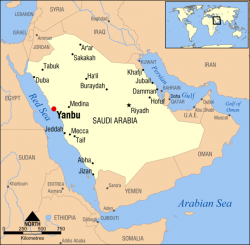
"The largest oil exporter in the Middle East has teamed up with the second largest consumer of oil in the world (China) to build a gigantic new oil refinery and the mainstream media in the United States has barely even noticed it. This mammoth new refinery is scheduled to be fully operational in the Red Sea port city of Yanbu by 2014. Over the past several years, China has sought to aggressively expand trade with Saudi Arabia, and China now actually imports more oil from Saudi Arabia than the United States does. In February, China imported 1.39 million barrels of oil per day from Saudi Arabia. That was 39 percent higher than last February. So why is this important? Well, back in 1973 the United States and Saudi Arabia agreed that all oil sold by Saudi Arabia would be denominated in U.S. dollars. This petrodollar system was adopted by almost the entire world and it has had great benefits for the U.S. economy. But if China becomes Saudi Arabia's most important trading partner, then why should Saudi Arabia continue to only sell oil in U.S. dollars? And if the petrodollar system collapses, what is that going to mean for the U.S. economy?..."

at http://theeconomiccollapseblog.com/archives/saudi-arabia-and-china-team-up-to-build-a-gigantic-new-oil-refinery-is-this-the-beginning-of-the-end-for-the-petrodollar

Saturday, March 24, 2012

HKMEx: to launch yuan-settled gold, copper futures by July

"The Hong Kong Mercantile Exchange (HKMEx) plans to launch yuan-settled gold and copper futures by July, its president said on Friday, as it looks to tap growing interest in commodities from Chinese investors..."

at http://www.reuters.com/article/2012/03/23/hkmex-futures-idUSL3E8EN2BL20120323

Friday, March 23, 2012

China, Russia Voice "US In Iran" Ire

"In a number of stories in China's top newspapers today, the US has been slammed for its moves to restrict Iran's oil trade which could see Chinese banks sanctioned. As The People's Daily noted, Hong Lei (a Foreign Ministry spokesperson) warned such unilateral action was not only wrong but could exacerbate the stand-off over Iran's nuclear program. Arguing that China 'imports oil based on its economic development needs' without violating relevant resolutions of the UN Security Council and undermining the third party's and international community's interests, he noted China will not accept the practice of saddling unilateral sanctions on the third country. Adding to this, China Daily notes the typical UN blah-dom of Wang Min's comments of the "more pragmatic importance to be firmly committed to dialogue and negotiations in order to properly solve the Iranian nuclear issue". While China is clearly 'disappointed' in the US efforts, Russia turns the dial to 11 with its comments that the US efforts are inflaming, as Russia's Foreign Minister Sergei Lavrov said Tuesday, "Scientists in nearly all countries....are convinced that strikes may slow down the Iranian nuclear program. But they will never cancel it, close it down or eliminate it" warning that Iran will have no option but to develop nuclear weapons should the US strike. Well you can't please all the people all the time eh? Just ask Ben..."

at http://www.zerohedge.com/news/china-russia-voice-us-iran-ire